Where to buy peptides in 2027: prescription, compounded, and research-grade channels
The three legal ways a peptide reaches a buyer in the United States, the one rule that separates a research supplier worth using from one that is not, a vetting checklist you can run in ten minutes, and the regulatory changes of 2024 to 2026 that set up 2027.
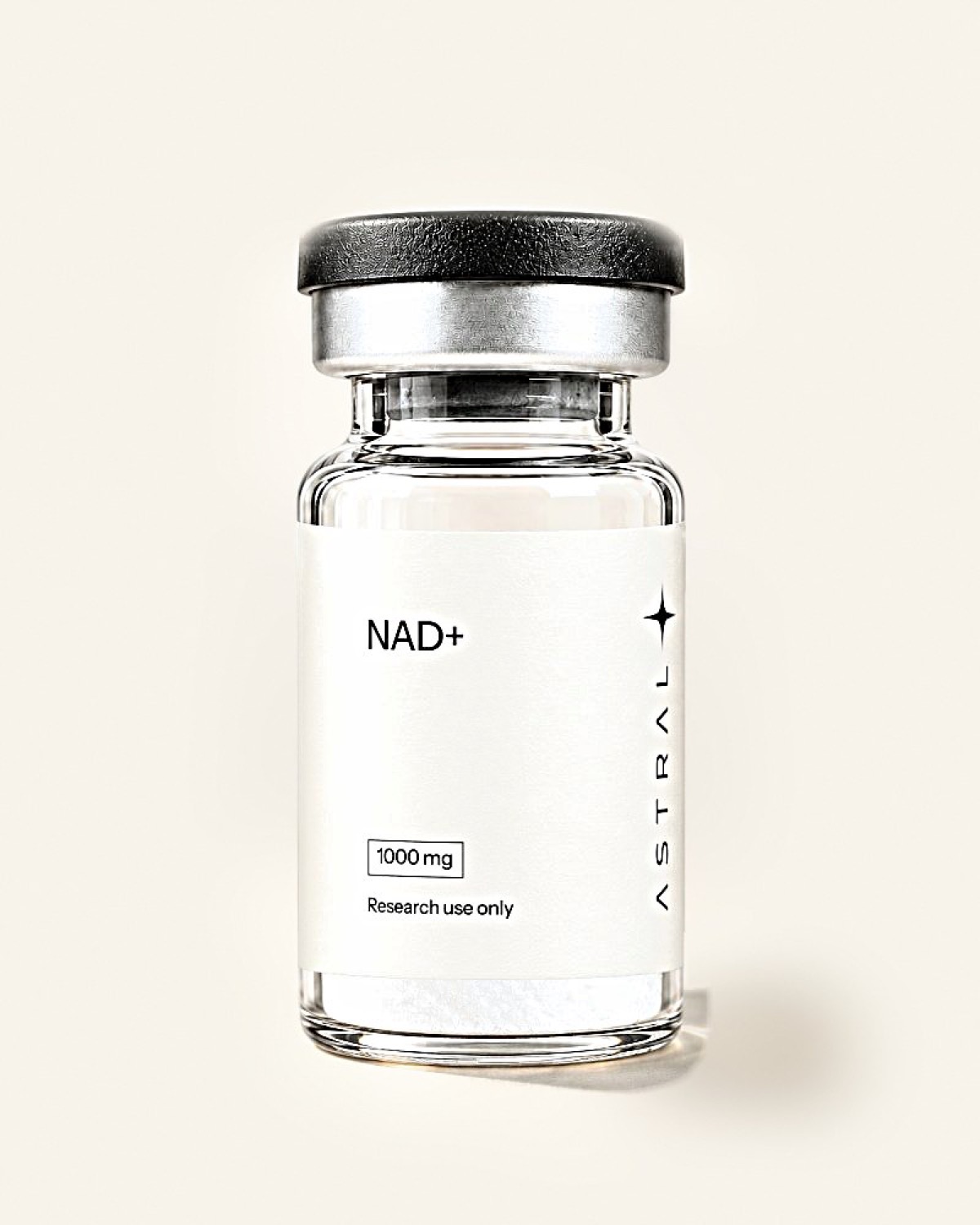
Peptides reach a U.S. buyer through three legal channels: an FDA-approved drug on prescription from a state-licensed pharmacy, a compounded drug dispensed on a prescription, or a research-grade chemical labeled for research use only. A research buyer has one rule. Buy from a named, reachable U.S. business that labels for research use, makes no health or dosing claims, and states exactly what is in the vial.
This guide explains each channel as the law stood in October 2026, how to tell a legitimate research supplier from a storefront, and what to re-check as 2027 begins. One section measures our own site against the same checklist. Nothing here is legal advice. It describes public rules and public records.
Table of contents
Where can you legally buy peptides in the United States?
Where you can legally buy a peptide in the United States depends on what the peptide is for. Under 21 U.S.C. 321(g)(1), an article intended to diagnose, treat or prevent disease in a person, or to affect the structure or any function of the body, is a drug. A drug is either FDA-approved and dispensed on prescription, or compounded under section 503A or 503B of the Food, Drug, and Cosmetic Act. A peptide sold for laboratory research is a chemical. It is sold to researchers, labeled for research use only, and offered with no claim about what it does in a person.
On its page about unapproved semaglutide, tirzepatide, retatrutide and related products, current as of October 1, 2026, the FDA writes that patients should obtain a prescription from their doctor and fill it at a state-licensed pharmacy. If you want a peptide for your own medical use, that is the channel.
| Channel | Who it serves | Legal basis | Oversight | Prescription |
|---|---|---|---|---|
| Approved drug | Patients | FDA approval, state pharmacy license | FDA review and inspection | Yes |
| Compounded drug | Patients an approved drug cannot serve | FD&C Act 503A or 503B | State license at 503A, FDA and CGMP at 503B | Yes |
| Research-grade | Laboratories | Sold as a chemical for research | Intended-use rules, no pre-market review | No |
What is the difference between prescription, compounded, and research-grade peptides?
A prescription peptide, a compounded peptide, and a research-grade peptide can share a molecule and still be three different products in the eyes of the law. The difference is who made it, under what rules, and for whom.
An approved prescription product has been through the FDA’s new drug approval process, with its manufacturing and labeling reviewed. Semaglutide and tirzepatide injection products are in this category, dispensed by a pharmacist against a prescription.
A compounded drug under section 503A is made for an identified individual patient on a valid prescription order. Under 21 U.S.C. 353a, a licensed pharmacist in a state-licensed pharmacy or federal facility, or a licensed physician, may compound, and the bulk substance must meet one of three conditions. It complies with a United States Pharmacopeia or National Formulary monograph, or it is a component of an FDA-approved drug, or it appears on the 503A bulks list that the FDA develops by regulation. Outsourcing facilities under section 503B register with the FDA, follow current good manufacturing practice, and are inspected on a risk-based schedule. Compounded drugs are not FDA-approved, in the FDA’s own words.
A research-grade peptide is a chemical sold to a laboratory, with no approval and no prescription. Its regulatory status rests on intended use, which 21 CFR 201.128 defines by the objective intent of the people responsible for the labeling, shown through labeling claims, advertising, oral or written statements, and the circumstances surrounding distribution. A supplier that labels a vial for research and then describes what it does in a person has, in the FDA’s reading, made a drug.
What changed in U.S. peptide regulation from 2024 to 2026?
Three shifts in U.S. peptide regulation between late 2024 and mid 2026 changed where peptides can be bought, and each is current as of October 2026.
The first is the end of the semaglutide and tirzepatide shortages. The FDA determined on December 19, 2024 that the tirzepatide injection shortage was resolved, and on February 21, 2025 that the semaglutide injection shortage was resolved. Enforcement discretion for compounders then ran out. For 503A pharmacies the FDA tied the end to a fixed date or a pending court ruling, whichever came later, and its updates of March 10 and April 28, 2025 record that the periods had ended. For 503B outsourcing facilities the dates were fixed: March 19, 2025 for tirzepatide and May 22, 2025 for semaglutide. In an update dated April 1, 2026, the FDA stated that neither drug appears on the 503B bulks list or the drug shortage list. As of May 31, 2026 the agency had received 990 adverse event reports associated with compounded semaglutide and more than 730 associated with compounded tirzepatide, figures it says are likely underreported.
The second is enforcement against sellers who label peptides for research and market them to people. The FDA says it has warned companies that sold such products falsely labeled “for research purposes” or “not for human consumption” directly to consumers with dosing instructions. Its warning letters dated December 10, 2024, March 31, 2026 and August 24, 2026 went to online sellers of semaglutide, tirzepatide, retatrutide and other peptides. Each letter acknowledges the research-use labeling and then states that evidence from the seller’s website established the products as drugs intended for human use, and the two 2026 letters cite 21 CFR 201.128 for that reading. The FDA found the products to be unapproved new drugs under section 505(a) of the FD&C Act, sold in violation of section 301(d).
The third is movement on the compounding side for peptides that research suppliers also sell. Under the FDA’s interim policy for 503A compounding, nominated bulk substances were sorted into Category 1 (under evaluation, with no enforcement intended while the guidance conditions are met), Category 2 (significant safety risks identified) and Category 3 (nominated without adequate support). The revised guidance of January 2025 ended that sorting for anything nominated on or after January 7, 2025.
In 2026 the peptide entries moved. The FDA’s safety-risks page for compounding bulk substances, current as of April 22, 2026, lists 17 substances that were previously in Category 2 and whose nominations the nominators withdrew, all of them peptides or peptide derivatives. The agency’s three-category document, updated May 14, 2026, leaves kisspeptin-10 as the only peptide in 503A Category 2. The Pharmacy Compounding Advisory Committee met on July 23 and 24, 2026 to consider seven of the withdrawn peptides for the 503A bulks list, and as of the meeting page dated August 6, 2026 the FDA had posted no minutes or vote results. A committee recommendation is advisory. Additions to the list are made by regulation, and as of October 29, 2026 the list in 21 CFR 216.23 holds six substances, none of them a peptide.
One entry touches our catalog. The May 14, 2026 document records that GHK-Cu (except for injectable routes of administration) left Category 1 on April 22, 2026 when its nominations were withdrawn, returned after one nominator clarified on May 5, 2026 that it meant to withdraw only the injectable route, and that the FDA intends to consult the advisory committee about GHK-Cu before the end of February 2027.
What to re-check at the start of 2027: whether any peptide has been added to 21 CFR 216.23, whether the FDA has published outcomes from the July 2026 meeting or the GHK-Cu consultation, and whether new warning letters have changed how the agency reads research-use labeling.
How can you tell if a peptide supplier is legitimate?
A legitimate research-peptide supplier shows itself in plain, checkable ways: who it is, how it labels, what it says about its products, and how it treats an order. Every line below can be checked from your desk in about ten minutes.
| Criterion | What good looks like | How to verify |
|---|---|---|
| Named business | Company name and a support contact | Contact, terms and privacy pages |
| Research-use labeling | Research-use statement on label and site | Read the label and the footer |
| No health or dosing claims | Nothing about effects in a person, no protocols | Read three product pages |
| Product page states the compound | Name, CAS, formula or sequence, weight, vial size | Product specs on the page |
| Lyophilized vials | Freeze-dried powder, storage guidance given | Product page or storage guide |
| U.S. shipping | Delivery options and rates stated before payment | Shipping page and checkout |
| Clear terms | Effective date, remedies, dispute process | Terms of service page |
| Sensible prices | In range for the compound and vial size | Compare a few suppliers |
| Payment with recourse | Cards or PayPal, with a dispute route | Checkout page |
| Responsive support | A person answers, with order number | Send a question before you buy |
What should a peptide supplier’s product page state?
A peptide supplier’s product page should identify the compound exactly and say nothing about what it does in a person. The compound name and any catalog alias come first. Then the CAS number, which lets you confirm the molecule against an outside registry, the molecular formula or amino acid sequence, the molecular weight, the physical form, and the net quantity per vial. A storage statement belongs on the page as well.
As a concrete example, our GHK-Cu page lists CAS number 89030-95-5, molecular formula C14H24CuN6O4, molecular weight 403.93 g/mol, lyophilized powder, and a net quantity of 50 mg per vial, followed by the intended-use statement that the peptide is for in vitro research only by qualified professionals. Our GLP-3 RT page, our catalog name for retatrutide, lists CAS number 2381089-83-2 and a molecular weight of 4731.4 g/mol in the same format.
What the page leaves out matters as much. No claims about effects in a person, no dosing, no protocols, no before-and-after language. The FDA’s warning letters treat exactly that wording as the evidence that a research label does not mean what it says.
What are the red flags when buying peptides online?
The clearest red flags when buying peptides online are the ones the FDA itself has acted on. A product page labeled for research that goes on to describe effects in a person, or to give dosing, is the pattern named in every warning letter above. Treat it as disqualifying.
Other signs follow from the checklist. A compound sold under a brand drug’s name. No company name and no support contact. No terms page, or terms with no effective date. A product page with no CAS number, no molecular weight and no stated quantity. Testimonials, before-and-after language, or protocol talk anywhere on the site. Prices far below the range for the compound. Payment only by wire transfer or another method with no dispute route. Any one is reason to stop. Two together is a pattern.
Should you buy peptides from a domestic or an overseas supplier?
Whether to buy peptides from a domestic or an overseas supplier comes down to recourse and the law at the border. A U.S. supplier can be reached under U.S. consumer and payment law. An overseas seller usually cannot.
The FDA’s position on personal importation, on a page current as of August 18, 2025, is that in most circumstances it is illegal for individuals to import drugs or devices into the United States for personal use, and that the agency cannot ensure the safety and effectiveness of medicine purchased over the internet from foreign sources.
In a study published in the Journal of Medical Internet Research in November 2024, researchers bought semaglutide from six websites they classed as illegal online pharmacies, each selling without a prescription, and three vials arrived. Each contained 28.56 to 38.69 percent more semaglutide than its label stated, endotoxin was detected in every sample, and the authors classed all three as probable substandard and falsified products.
What do research peptides cost?
Research peptides are priced per vial, and the price moves with the compound and the mass of material in the vial.
From our own catalog on October 31, 2026, GHK-Cu lists at $27.99 for a 50 mg vial and $47.99 for 100 mg, and GLP-3 RT (retatrutide) lists at $67.99 for 10 mg, $117.99 for 20 mg and $157.99 for 30 mg. Delivery is priced at checkout for the address and method you choose. The catalog is the current record. A price far below the range for a compound is a reason to ask what you are paying for.
How does Astral measure up against this checklist?
Astral is a U.S. research-peptide supplier, and the checklist above describes how we built the site. Here is how it stood on October 31, 2026.
Our compounds are synthesized, lyophilized and vialed in the United States, and fulfillment is in-house from our own inventory, with nothing drop-shipped. We carry fewer compounds on purpose, so each one gets the same attention. Each product page states the CAS number, the molecular formula or weight, the form and the net quantity per vial, followed by the intended-use statement, and every vial ships as lyophilized powder with the storage guide and the reconstitution guide linked from the page. What we sell is tested by laboratories independent of us.
U.S. orders choose Standard, 2-Day or Overnight delivery, with the price shown at checkout before payment, and we ship to 200 international destinations. Payment details are entered on the payment provider’s secure surface rather than on our storefront. The terms carry an effective date, name reshipment as the remedy for a delivery the carrier loses, a wrong or damaged item, or an international shipment that customs seizes, and set out a contact-first dispute process that does not waive your right to dispute a charge.
The site footer carries the research-use statement. The site provides no dosing instructions and no human or animal protocols, and Astral is a chemical supplier and is neither a 503A pharmacy nor a 503B outsourcing facility. Support is at support@astralpeptide.com or through a ticket in your account, and you reach someone who knows the catalog. We will tell you what a compound weighs and how to store it. We will not tell you what to do with it.
Frequently asked questions
Is it legal to buy research peptides in the United States?
Yes, for laboratory research. A peptide sold as a research chemical, labeled for research use only and marketed with no claims about effects in a person, can be sold lawfully to researchers. The same peptide marketed for human use is an unapproved new drug, and the FDA’s 2024 to 2026 warning letters treat the seller’s website as the evidence of intent.
Can I buy peptides without a prescription?
A peptide for use in a person requires a prescription, whether it is an approved drug or a compounded preparation, and the FDA says to fill it at a state-licensed pharmacy. A research-grade peptide is a chemical sold to a laboratory, and no prescription applies because it is not a drug product for a person.
What does “for research use only” mean?
The phrase appears in federal regulation at 21 CFR 809.10(c)(2)(i) as the labeling statement for in vitro diagnostic products in the laboratory research phase of development. On a peptide vial it states the seller’s intended use: laboratory research, and no human or veterinary use, consumption, diagnosis or treatment. The label alone does not settle regulatory status, because intended use is judged from labeling, advertising and the circumstances of sale.
Are peptides from overseas suppliers safe to buy?
An overseas seller offers no U.S. legal recourse, and the FDA states that in most circumstances it is illegal for individuals to import drugs into the United States for personal use. In the one peer-reviewed purchase study we found, published in November 2024, every semaglutide vial received from a no-prescription online seller contained more of the compound than its label stated and carried detectable endotoxin.
Why do research peptides ship as lyophilized powder?
Lyophilization, or freeze-drying, removes the water that most degradation reactions need, so a sealed vial of powder keeps far longer than any solution. Our storage guide gives the typical windows for a sealed vial kept dry and dark: 2 to 5 years or more at minus 20 °C, 1 to 2 years or more in a refrigerator at 2 to 8 °C, and 6 months or more at a controlled room temperature.
What should a supplier’s product page state?
The compound name and any alias, the CAS number, the molecular formula or sequence, the molecular weight, the physical form, the net quantity per vial, and how to store it, followed by a research-use statement. It should say nothing about effects in a person and give no dosing or protocols.
How much do research peptides cost?
Price depends on the compound and the mass in the vial. On October 31, 2026 our catalog listed GHK-Cu from $27.99 for 50 mg and GLP-3 RT (retatrutide) from $67.99 for 10 mg, with delivery priced at checkout.
How should research peptides arrive and be stored?
Research peptides should arrive as lyophilized powder in sealed vials. Keep sealed vials cold, dry and dark, and let a cold vial reach room temperature before opening it. Our storage guide covers each condition and the reconstitution guide covers the laboratory steps from a sealed vial to a solution.
Astral supplies peptides for laboratory research only. This guide describes buying channels, public regulatory records and supplier practices, and it describes no use of any compound in a person or animal.
Sources
- Bulk Drug Substances Used in Compounding Under Section 503A of the FD&C Act U.S. Food and Drug Administration (2026)
- Bulk Drug Substances Nominated for Use in Compounding Under Section 503A of the Federal Food, Drug, and Cosmetic Act U.S. Food and Drug Administration (2026)
- Certain Bulk Drug Substances for Use in Compounding that May Present Significant Safety Risks U.S. Food and Drug Administration (2026)
- Interim Policy on Compounding Using Bulk Drug Substances Under Section 503A of the Federal Food, Drug, and Cosmetic Act: Guidance for Industry U.S. Food and Drug Administration (2025)
- July 23-24, 2026: Meeting of the Pharmacy Compounding Advisory Committee U.S. Food and Drug Administration (2026)
- FDA clarifies policies for compounders as national GLP-1 supply begins to stabilize U.S. Food and Drug Administration (2026)
- FDA's Concerns with Unapproved GLP-1 Drugs Used for Weight Loss U.S. Food and Drug Administration (2026)
- Compounding and the FDA: Questions and Answers U.S. Food and Drug Administration (2025)
- Human Drug Compounding U.S. Food and Drug Administration (2026)
- Warning Letter 695607, December 10, 2024 (Warning Letters database) U.S. Food and Drug Administration (2024)
- Warning Letter 721806, March 31, 2026 (Warning Letters database) U.S. Food and Drug Administration (2026)
- Warning Letter 735127, August 24, 2026 (Warning Letters database) U.S. Food and Drug Administration (2026)
- Personal Importation U.S. Food and Drug Administration (2025)
- 21 U.S.C. 353a, Pharmacy compounding United States Code, via Legal Information Institute
- 21 CFR 201.128, Meaning of intended uses Electronic Code of Federal Regulations (2026)
- 21 CFR 809.10, Labeling for in vitro diagnostic products Electronic Code of Federal Regulations (2026)
- 21 CFR 216.23, Bulk drug substances that can be used to compound drug products in accordance with section 503A Electronic Code of Federal Regulations (2026)
- Multifactor Quality and Safety Analysis of Semaglutide Products Sold by Online Sellers Without a Prescription: Market Surveillance, Content Analysis, and Product Purchase Evaluation Study Ashraf AR, Mackey TK, Vida RG, et al. Journal of Medical Internet Research (2024)
- 21 U.S.C. 321(g)(1), definition of drug United States Code, via Legal Information Institute