How long does bac water last? Opened, fridge, frozen
An unopened vial keeps until the date printed on it, and a punctured one gets 28 days. Here is where both numbers come from, what the refrigerator does and does not change, and how to tell when a vial is done.
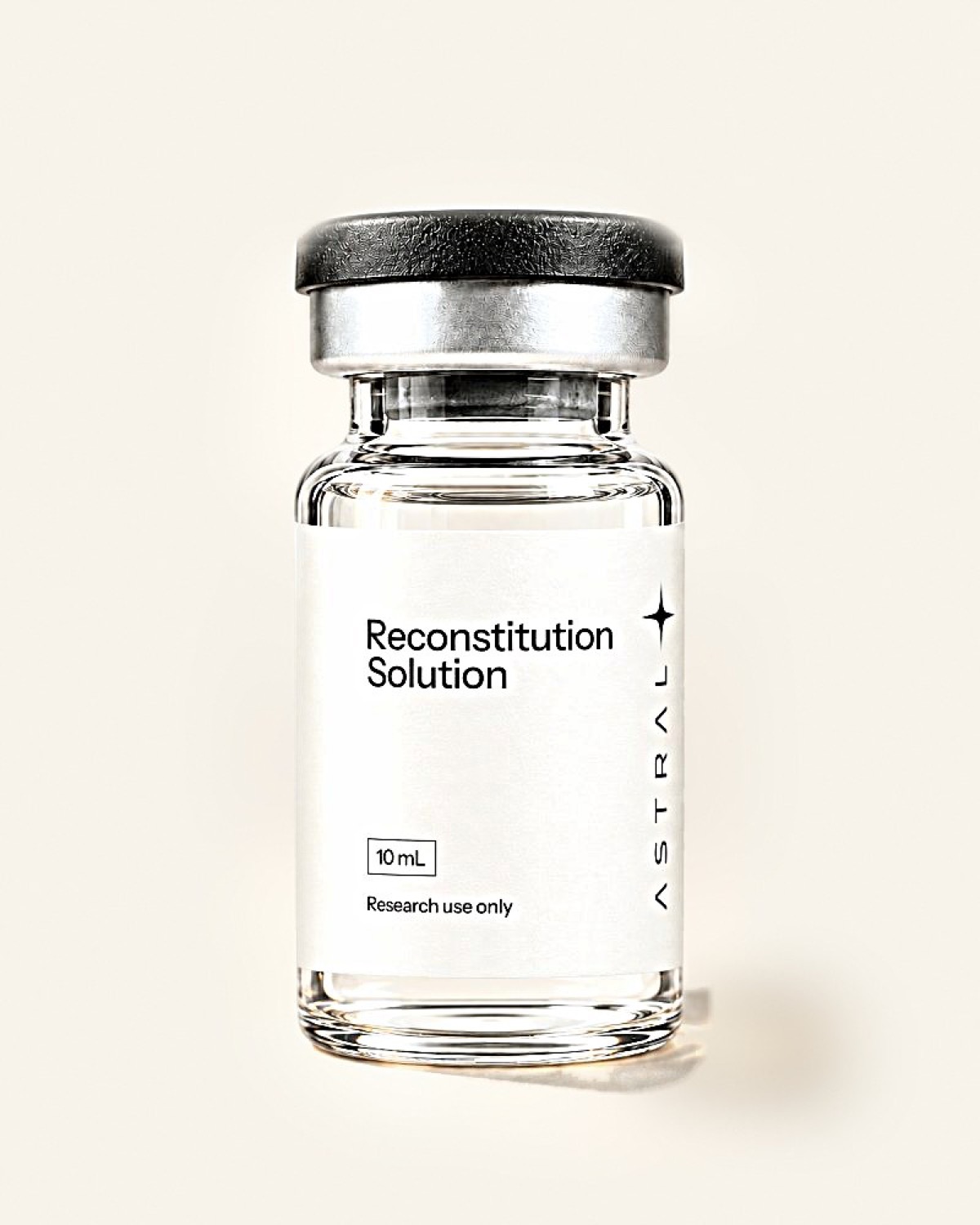
Unopened bac water lasts until the expiration date printed on the vial, stored at 20 to 25 °C. Once the stopper has been punctured, the working limit is 28 days from that first puncture, or the printed date if it comes sooner. The refrigerator does not lengthen either number.
Table of contents
How long does unopened bac water last?
Until the date on the vial. Bac water is Bacteriostatic Water for Injection, USP, which is sterile water with benzyl alcohol added as a preservative, and every vial carries an expiration date on its label. Federal manufacturing rules require that date to come from stability testing, and they tie it to the storage conditions stated on the labeling. The printed date holds only if the vial has been kept the way the label says.
The label says 20 to 25 °C (68 to 77 °F), which the United States Pharmacopeia calls controlled room temperature. That definition has some give in it. Excursions between 15 and 30 °C during shipping and storage are allowed, and brief spikes up to 40 °C are tolerated as long as they last no more than 24 hours. A warm afternoon in transit falls inside the definition. A summer in a garage does not.
No single shelf life applies to every vial, because the date depends on when it was made. Read it off the vial in hand.
How long does bac water last after opening?
Twenty-eight days from the first puncture. The figure comes from USP General Chapter <797>, the pharmacopeial standard for sterile compounding, and the Centers for Disease Control and Prevention relays it in one sentence: once a multi-dose vial is opened or needle-punctured, it should be dated and discarded within 28 days unless the manufacturer states another date for that opened vial. That date should never run past the manufacturer’s original expiration date, the CDC adds. A vial first punctured ten days before it expires has ten days.
The manufacturer’s label for Bacteriostatic Water for Injection gives no in-use period of its own. It asks for aseptic technique at every entry and stops there, which leaves the 28-day default standing. If the label on your vial does state an in-use period, that statement governs.
A survey of a 1,300-bed hospital, published in 2004, collected every multiple-dose vial in use on one day and found an opening date written on only half of them. Write the date on the vial at the first puncture.
Where does the 28 days come from?
From the way the preservative is tested. Where USP <797> states the 28-day limit, it points to another chapter, <51>, Antimicrobial Effectiveness Testing. That test deliberately contaminates a preserved product with five organisms, three bacteria, a yeast and a mold, at 100,000 to 1,000,000 cells per milliliter. The containers are held at 20 to 25 °C and sampled over 28 days. To pass as an injectable, a product must cut the bacteria at least tenfold by day 7 and a thousandfold by day 14, with no rebound at day 28, and the yeast and mold must not increase at any point.
So 28 days is the span over which a preservative system is shown to hold. Nothing says the water turns on day 29. The test ends there, and the standard does not credit what has not been tested.
The preservative has limits inside that window too. The CDC notes that it has no effect on viruses and does not give complete protection against bacterial contamination.
Why does a punctured vial get a deadline at all?
Because every draw goes through the same stopper. A multiple-dose closure is built for that. The pharmacopeia requires that it admit a needle and close at once when the needle is withdrawn, and the test for these closures pierces each one ten times at different sites before checking for leaks. Each pass can also shave off a fragment. In a 2022 bench study of multi-dose vial stoppers, rubber cores turned up in 17% of punctures overall, and large-bore needles were the main cause.
Does bac water need to be refrigerated?
No, before or after opening. The label’s storage statement is 20 to 25 °C and it does not change once the vial is punctured. The 28-day figure carries no temperature condition either, and the challenge test behind it is run at room temperature.
Can it go in the fridge anyway? Yes. USP’s storage chapter says an article labeled for controlled room temperature may alternatively be stored in a cool place or refrigerated, unless its label says otherwise, and this label does not. What the fridge will not do is buy time. No source we could find extends the printed date or the 28 days for a refrigerated vial, so the dates stay where they were.
What happens if bac water freezes?
The label gives no instruction about freezing, for or against. Under USP’s labeling rules, a “protect from freezing” instruction appears where freezing would cost an article its strength or alter it destructively, and this label carries none. The absence of a warning does not make freezing harmless. A frozen vial has been stored well outside the 15 to 30 °C band, and no manufacturer or pharmacopeial document we found says what a freeze and thaw does to it.
Water expands when it freezes, and USP names breakage of the container as a risk in its own right. The label’s test for use still applies after a thaw: the solution must be clear and the seal intact.
So check a vial that froze at the back of the fridge the way you would check a dropped one. A crack, a stopper that has shifted, or liquid at the crimp ends the discussion. If the container is sound and the thawed water is clear, the label’s conditions are met, but the vial’s history now includes a condition nobody tested. Replacing it is the conservative call.
How long does bac water last in each situation?
| Situation | How long | Why |
|---|---|---|
| Unopened, at 20 to 25 °C | Until the printed expiration date | The date comes from stability testing at the labeled storage temperature |
| Opened, at room temperature | 28 days from first puncture, or the printed date if sooner | USP <797> limit for a punctured multiple-dose container, matching the 28-day preservative test |
| Opened or unopened, refrigerated | The same dates as above | Refrigeration is permitted for a room-temperature article, and nothing extends its dates |
| Frozen and thawed | No supported figure. Discard if the vial or stopper is damaged, and replace it if in doubt | The label is silent on freezing, and freezing is outside the tested storage range |
| Past the printed date | Zero days | The expiration date is the end of what was tested, opened or not |
How can you tell bac water should be discarded?
By looking at it. The label gives two instructions. Do not use the vial unless the solution is clear and the seal is intact, and inspect it for particulate matter and discoloration before use. It should look like water.
- Cloudy. Fails the label’s clarity test. Discard it.
- Particles or specks. Fails the particulate inspection. A dark fleck after several draws may be a core of stopper rubber, and the answer is the same.
- Any tint. The label names discoloration as a reason to stop.
- Cracked vial, loose crimp, or a stopper that is split or has moved. The seal is no longer intact. USP <797> has the stopper inspected for physical integrity before every entry and directs that a vial with suspected contaminants or abnormal properties be discarded.
- No date on it. If you cannot say when it was first punctured, you cannot count 28 days.
Smell is harder. The label describes no odor test. Benzyl alcohol itself has a faint aromatic odor, so a slight scent is the preservative. It oxidizes slowly in air to benzaldehyde, which smells of bitter almond, and to benzoic acid. As for the vinegar smell people report, vinegar is acetic acid, which is not an ingredient, and we found no published source that explains it. A vial that smells sharply of anything is showing an abnormal property. Replace it.
Is the 28 days the same for a peptide mixed with bac water?
No. Everything above is about the solvent vial. A peptide reconstituted in bac water is a different material with its own storage temperature and its own date. The bac water label says not to store reconstituted solutions unless the manufacturer of the solute directs it, which hands the question to the peptide.
The solvent sits on a shelf. The mixed vial goes in the refrigerator at 2 to 8 °C from the first day. Our peptide storage guide covers how long a reconstituted peptide keeps and why, How to reconstitute peptides covers the mixing, and cloudy peptides after reconstitution covers a mixed vial that turns hazy. For the choice of solvent itself, see bacteriostatic water vs sterile water.
Astral’s Reconstitution Solution is this formulation, sterile water with 0.9% benzyl alcohol, in 10 mL and 30 mL vials.
Common questions
How long does bac water last in the fridge?
The same as on the shelf. Unopened, until the printed expiration date. Opened, 28 days from the first puncture or the printed date, whichever comes first. Refrigeration is permitted and extends neither.
Does bacteriostatic water expire?
Yes. Every vial carries an expiration date set by stability testing at the labeled storage temperature, and a punctured vial is discarded 28 days after first entry even if the printed date is further off.
Does bac water need to be refrigerated after opening?
No. The label’s storage statement is 20 to 25 °C and does not change after opening. The peptide you mix with it does need the refrigerator.
Does bac water go bad?
It can. Cloudiness, particles, a tint, a damaged stopper or a cracked vial are all reasons to discard it, whatever the date says.
My bac water froze in the fridge. Can I still use it?
Discard it if the vial is cracked or the stopper has shifted. If it thaws clear with the seal intact it meets the label’s test, but freezing is outside the storage range the date was tested in, so replacing it is the safer choice.
Sources
- Bacteriostatic Water for Injection, USP, prescribing information (revised 2019) Hospira, via DailyMed, National Library of Medicine
- Preventing Unsafe Injection Practices: key points for multi-dose vials Centers for Disease Control and Prevention, March 26 (2024)
- 21 CFR 211.137, Expiration dating Electronic Code of Federal Regulations (2026)
- Bacterial contamination of multiple-dose vials: a prevalence study Mattner F, Gastmeier P. American Journal of Infection Control (2004)
- The impact of needle size and angle on rubber coring after multiple puncturing of multi-dose propofol vial rubber stoppers Chotikawanich T, Kammee T, Khantee S. Heliyon (2022)
- Benzyl alcohol, compound summary (CID 244) PubChem, National Library of Medicine (2026)