Peptide vial has no vacuum: what it means
Freeze-dried vials leave the dryer at whatever headspace pressure the manufacturer chose, so a vial that does not pull solvent in is not, by itself, a bad vial. Here is how to read the signs that matter.
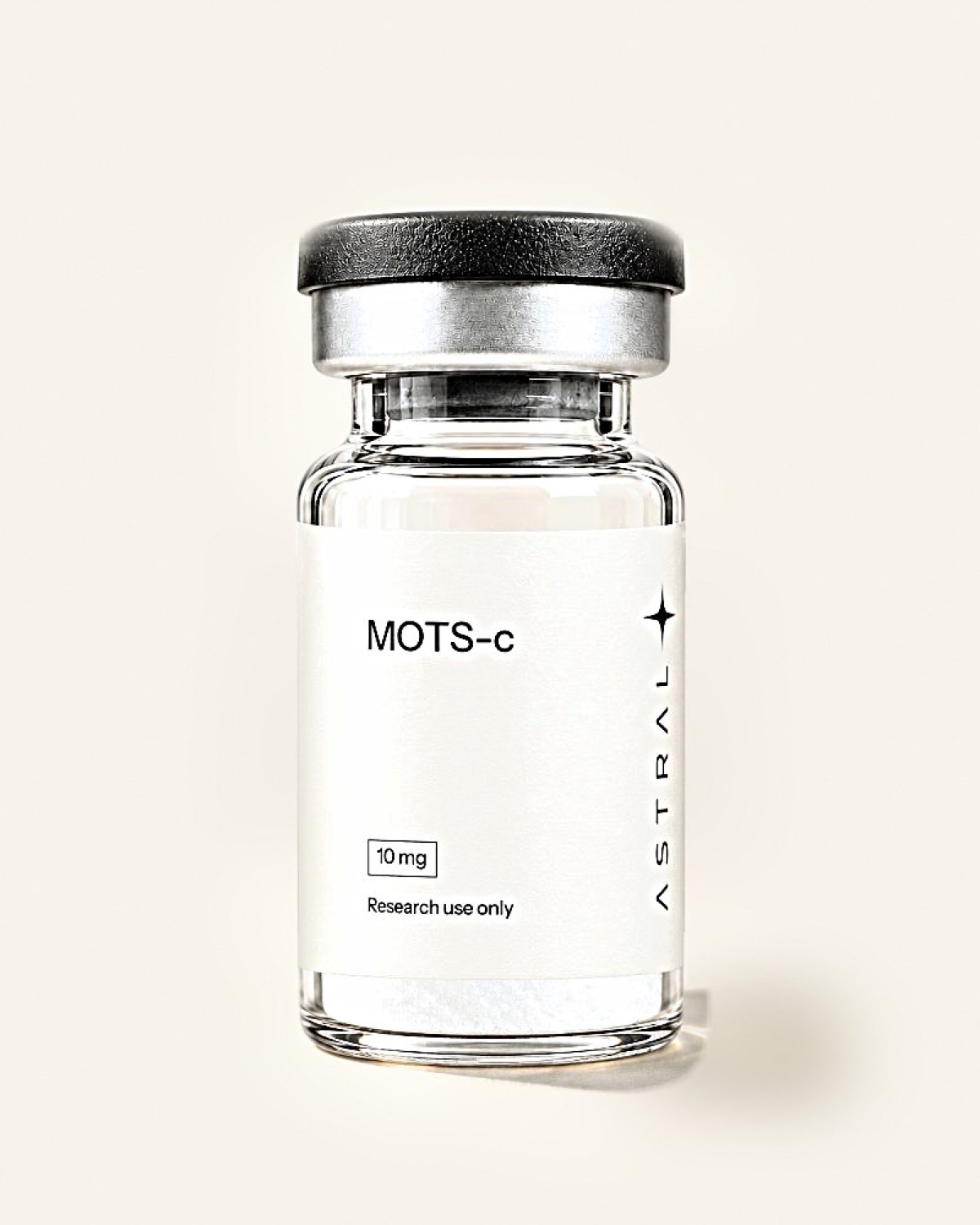
A freeze-dried peptide vial with no vacuum is usually fine. Manufacturers set the pressure inside the vial at the moment it is stoppered, anywhere from a full vacuum to a nitrogen headspace close to room pressure, so a vial that does not pull solvent in on its own may have been sealed exactly that way. The vacuum, or the lack of one, says little about the seal. The crimp, the stopper, the cake and how the powder behaves once solvent goes in say far more, and this guide walks through each of them.
Table of contents
Are peptide vials vacuum sealed?
Some are, some are not, and the difference is a manufacturing choice rather than a quality grade. Lyophilization removes water from a frozen product under vacuum, and at the end of the cycle the vials are still inside the dryer with their stoppers resting loosely on top. Before the stoppers are pressed home, the chamber is brought back up to a chosen pressure, usually with sterile nitrogen, and only then do the shelves lower and seat them. The FDA’s inspection guide for lyophilized parenterals describes this backfill step as admitting air or a selected gas to the evacuated chamber. Whatever the chamber pressure is when the stopper seats is the pressure sealed inside the vial.
That pressure varies by product. An application note from Lighthouse Instruments, which measures vial headspace for pharmaceutical manufacturers, puts the typical range for freeze-dried products at a partial vacuum of 0.5 to 0.9 atmospheres of nitrogen, with some products sealed under full vacuum. A vial at the low end pulls solvent in hard. A vial at 0.9 atmospheres barely pulls at all, because the difference between inside and outside is a tenth of room pressure. Nothing about the second vial is wrong. It left the dryer at the pressure its process called for.
Why choose one over the other? Nitrogen is there to displace oxygen. A 1990 study of a freeze-dried model protein found that air in the headspace accelerated degradation in the solid state and that argon or nitrogen slowed it. A deeper vacuum is chosen when the manufacturer wants the vial to draw liquid in through a needle, or when the formulation dissolves better that way, as one study of a gel-forming lyophilized product reported. A powder that dissolves readily without that help can be sealed with less. Neither choice is a shortcut.
What does a lost vacuum tell you about the seal?
Less than people hope. The question underneath “peptide vial lost vacuum” is a question about container closure integrity, the pharmacopeial term for a package keeping its contents in and the environment out. USP General Chapter <1207>, revised in 2016, favors deterministic leak tests with measurable detection limits, and headspace analysis and vacuum decay are two of them. A 2011 validation study showed a vacuum decay method reliably finding laser-drilled holes of about 5 micrometers in stoppered vials of a lyophilized product.
So manufacturers do use pressure as a leak signal. Lighthouse’s note explains why: if a stopper lifts briefly in the dryer before the aluminum cap goes on, gas enters, the headspace pressure rises, and that rise may impact the ability to reconstitute the product, along with exposing the powder to the oxygen and moisture in that air. The method works for a manufacturer because the manufacturer knows what pressure the vial started at.
You do not have that starting number at the bench. A vial that pulls nothing in may have been sealed at 0.9 atmospheres, or it may have been sealed under hard vacuum and lost it, and the absence of pull cannot tell the two apart. The exception is a product whose maker has told you what to expect. The U.S. prescribing information for one vacuum-dried drug product tells the user to discard the vial if a vacuum does not pull the diluent in, and that instruction means something precisely because the manufacturer designed the vacuum in and said so. Where a research peptide ships with no such statement, treat no-vacuum as a neutral observation and move to the signs below. A vacuum cannot vouch for the material either. A vial that pulls hard tells you the stopper and crimp held pressure, and nothing about what the powder is.
How do you read the signs at the bench?
Look at the vial before the needle goes anywhere near it, and watch it as the solvent goes in. The FDA inspection guide names what an inspector looks for in a finished cake, and you can see the same things with a hand lens. Meltback is a form of cake collapse, the guide says, caused by incomplete sublimation that leaves a pocket of moisture, and such cakes may be less stable.
| What you notice | What it can mean | What to do |
|---|---|---|
| Solvent is drawn in on its own | Sealed under partial vacuum, and it held | Normal. Keep the stream on the glass and let it draw |
| Solvent goes in with no pull and no push | Sealed near room pressure, or a vacuum that relaxed | Neutral on its own. Judge the cake and the solution |
| The plunger pushes back as you add solvent | Pressure rising as liquid displaces headspace | Add slowly, then vent as described below |
| A faint hiss as the needle enters | Air equalizing a pressure difference through the needle | Nothing. It confirms a difference existed |
| Crimp loose, turns by hand, or cracked | The cap is no longer holding the stopper compressed | Set the vial aside and contact the supplier |
| Stopper sits proud of the rim or is tilted | The stopper did not seat or has lifted | Set the vial aside and contact the supplier |
| Cake shrunken, collapsed, glassy or melted-looking | Collapse or meltback during drying, with moisture left behind | Record it. Expect slower dissolving and a shorter life in solution |
| Droplets inside the vial, or sticky, clumped powder | Moisture reached the powder, from the process or a breach | Set the vial aside and contact the supplier |
| Cake intact and the solution clears | The vial did what it was supposed to do | Proceed, label it, refrigerate it |
The crimp and the stopper are the integrity check you can run without instruments. The aluminum cap exists to hold the stopper compressed against the glass, and a cap that spins or a stopper standing above the rim means that compression is gone. Those two findings outrank anything the vacuum did or did not do.
The cake comes next. A shrunken or glassy cake is a drying problem rather than a sealing problem, but the FDA guide ties meltback to a change in the physical form of the material and to trapped moisture, and moisture is what freeze-drying removed. Our peptide storage guide covers why it is the biggest threat to a lyophilized peptide, and if the solution turns hazy, our guide to cloudy peptides after reconstitution takes it from there.
How does pressure behave when you add solvent and draw?
Every milliliter of liquid that goes in displaces a milliliter of headspace, and in a small vial that raises the pressure quickly. A vial sealed under vacuum absorbs the first portion without complaint. A vial sealed near room pressure pushes back almost at once, and the plunger wants to return under your thumb. Nothing is wrong in either case. The vial is a closed volume obeying the gas it contains.
The remedy is to vent. Before the needle comes out, draw out a volume of air equal to the liquid that went in, and the pressure returns to where it started. The University of North Carolina’s pharmaceutics laboratory has the operator remove slightly more air than the diluent added, so the vial sits at a slight negative pressure and is less likely to spray droplets when the needle comes out. Either leaves the vial near neutral and makes the next draw predictable.
Drawing is the mirror image. Pull the plunger back to the volume you intend to take, put that air into the vial first, then withdraw the liquid. A vial under negative pressure fights the draw and the plunger creeps back. A vial under positive pressure fills the syringe on its own and overshoots the mark. The mixing steps, including running the solvent down the glass rather than onto the powder, are in How to reconstitute peptides. The choice between a preserved solvent such as Reconstitution Solution and plain sterile water is in bacteriostatic water vs sterile water, and any change of volume changes the concentration, which the peptide calculator works out.
Should I inject air into a peptide vial?
The search phrase means adding a little air to balance pressure, and at the bench the answer is yes, in the same volume you are about to take out. What there is no reason to do is push air into a dry vial before any solvent has gone in. A vial under vacuum will take that air, and you will have given up the one thing the vacuum could have told you. Let the solvent be the first thing through the stopper.
What does a lab reasonably do with a no-vacuum vial?
Write down what you saw, then let the cake and the solution decide. Note whether the vial pulled, pushed or did neither on the same line where you record the concentration and the date. If the crimp and stopper are sound and the cake looks like a cake, reconstitute as usual and judge the result by the solution, which should be clear and free of particles. A vial whose crimp turns, whose stopper stands up, or whose powder is visibly wet goes aside unopened, and the supplier gets the lot number. Vacuum is a process setting. Treat it as one.
Common questions
My peptide vial lost its vacuum. Is it still good?
No pull is not evidence of a bad vial. Many freeze-dried products are sealed at 0.5 to 0.9 atmospheres of nitrogen rather than under hard vacuum, and the high end of that range gives almost none. Check the crimp, the stopper and the cake, and if those are sound, reconstitute and judge the solution.
Why won’t water go into my peptide vial?
Because the liquid has to displace gas in a closed volume, and a vial sealed near room pressure pushes back from the first drop. Add the solvent slowly down the glass, then draw out a volume of air equal to what you put in before removing the needle.
Should I inject air into a peptide vial before drawing?
Yes, in the amount you intend to withdraw. Pull the plunger to that mark, put the air in, then draw. Do not push air into a dry vial ahead of the solvent.
Why is there pressure in my peptide vial?
Either it was sealed close to room pressure under nitrogen, or liquid went in without the same volume of air coming out. Both are ordinary. Vent by drawing out air equal to the liquid added, or slightly more for a faint negative pressure.
Are peptide vials supposed to be vacuum sealed?
Only if the manufacturer designed them that way. The chamber is backfilled to a set pressure before the stoppers seat, and that pressure can be a full vacuum, a partial vacuum, or close to atmospheric. A vacuum is not a mark of authenticity, and its absence is not a mark of a fault.
Sources
- Lyophilization of Parenteral (7/93), Guide to Inspections U.S. Food and Drug Administration (1993)
- Stopper “Pop-Up” and the Effects on Container Closure Integrity of Freeze Dried Vials Lighthouse Instruments, application note, Pharmaceutical Online
- Safeguarding Vial Container Closure Integrity: A Systematic Approach Zeng Q. Pharmaceutical Engineering, ISPE (2021)
- The effects of formulation additives on the degradation of freeze-dried ribonuclease A Townsend MW, Byron PR, DeLuca PP. Pharmaceutical Research (1990)
- Development of gel-forming lyophilized formulation with recombinant human thrombin Murányi A et al. Drug Development and Industrial Pharmacy (2015)
- Vacuum decay container closure integrity leak test method development and validation for a lyophilized product-package system Patel J et al. PDA Journal of Pharmaceutical Science and Technology (2011)
- Container Closure Integrity Testing: Method Development for Freeze-Dried Products Using Laser-Based Headspace Oxygen Analysis Hede JO et al. PDA Journal of Pharmaceutical Science and Technology (2019)
- OnabotulinumtoxinA prescribing information, section 2, Preparation and Dilution Technique DailyMed, U.S. National Library of Medicine
- Aseptically Transferring Drug From a Vial The Pharmaceutics and Compounding Laboratory, UNC Eshelman School of Pharmacy